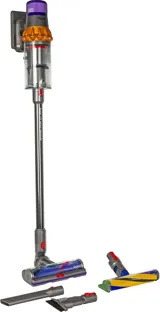
Cordless vacuums and pet hair: choosing well and cleaning well
A dog or a cat changes the way you clean: hair on the floor, the sofa, the stairs and even in the car. Here are the features that make the difference on a stick vacuum, and the method for dealing with pet hair without spending hours on it.
Contents
Why pet hair is a problem
Pet hair is one of the hardest things for a vacuum to deal with. It is light, bulky, often charged with static electricity, and it clings to the fibres of rugs, sofas and clothes. A vacuum that picks up fine dust very well can still be disappointing with pet hair.
Four difficulties come up again and again:
- Wrapping: long hair, like human hair, wraps around the brush bar, which eventually no longer touches the floor.
- Clinging to fabrics: on a sofa or a throw, suction alone is not enough to lift it.
- Volume: hair fills the bin much faster than dust.
- Allergens: it is not the hair itself that causes allergies, but proteins found in saliva, dander and skin secretions, which stick to hair and dust.
A stick vacuum suited to pets addresses each of these difficulties. Here are the features to check.
The tangle-free head
This is the most important feature. With a conventional head, you regularly have to turn the machine over, remove the battery and cut the wrapped hair with scissors. With a tangle-free head, a system removes hair from the brush bar during use and directs it towards the suction inlet.
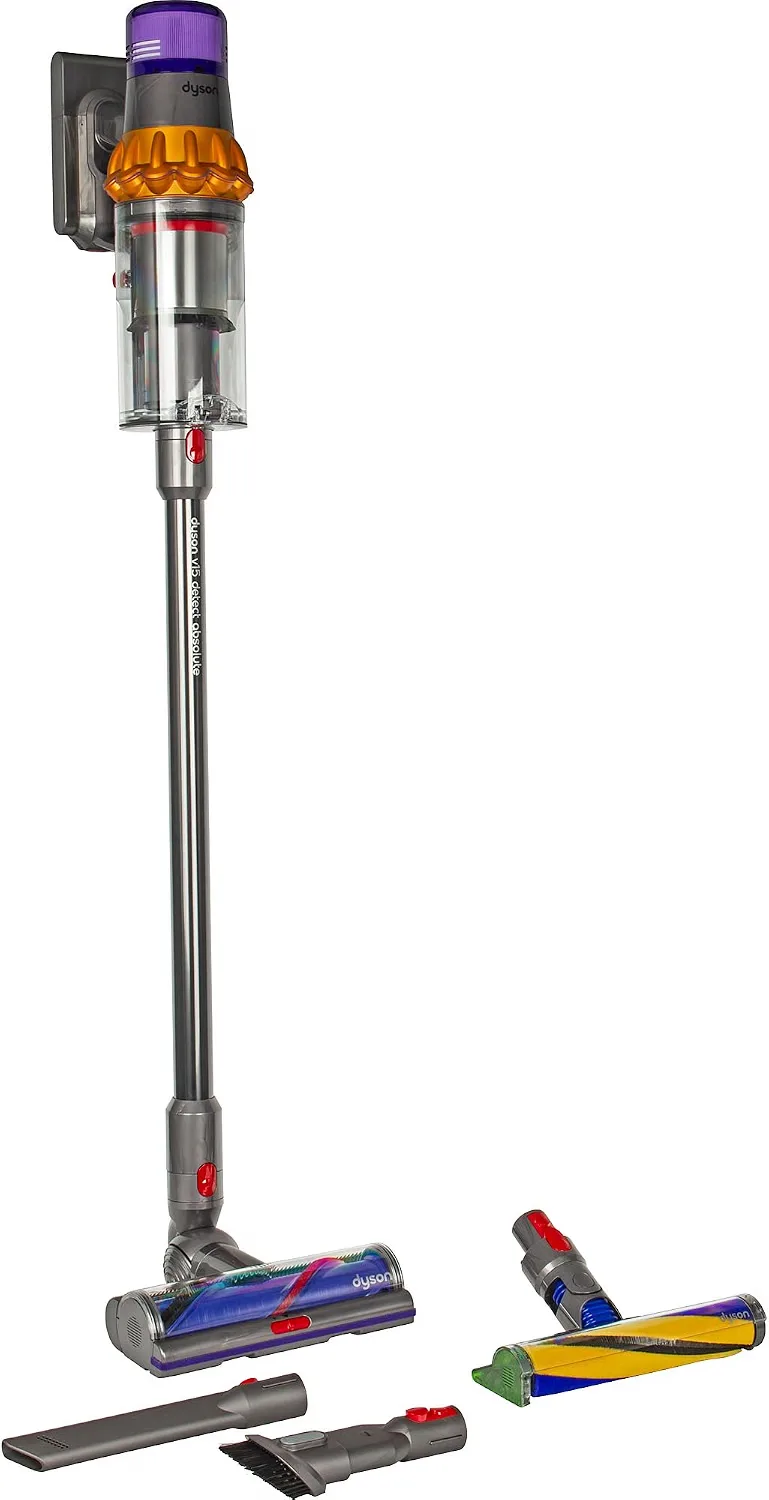
Manufacturers use several solutions: polycarbonate combs that scrape the brush bar, conical brush bars that slide hair towards one end, rubber rollers that hair clings to less easily. On the V15 Detect, the Digital Motorbar head is fitted with combs that remove hair from the brush bar while you vacuum, according to Dyson.
Good to know: no head is perfect. Threads, rug fringes and very long hair can still wrap. A quick check once a week is still useful.
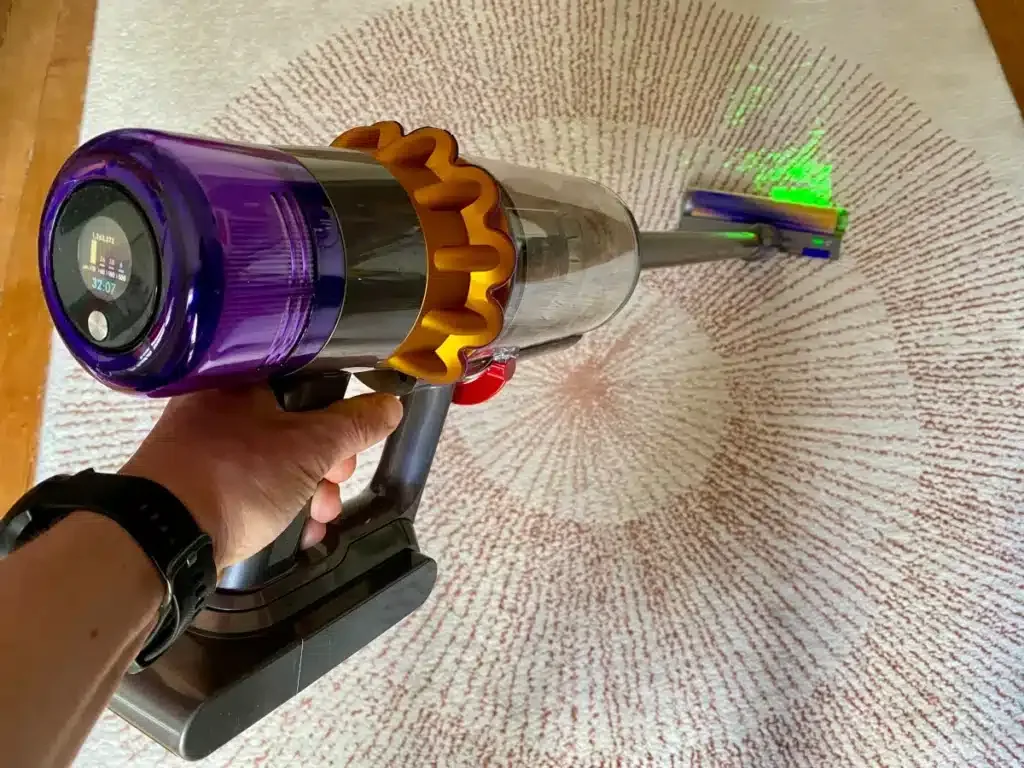
For hard floors, the soft roller is still preferable: it captures hair without flicking it away and gathers it efficiently. On the V15, the laser head also reveals fine, light-coloured hair that you would not see on a pale wood floor.
The fabric tool
The sofa, the bed, the pet bed, armchairs and car seats collect hair. For these, a dedicated tool makes all the difference:
- Mini motorised tool: a small stiff brush bar that loosens hair from fabrics before vacuuming it up.
- Spiral tool: on recent versions of the V15, the Hair screw tool uses a conical brush that stops long hair and fur from wrapping.
- Soft-bristle brush: for delicate fabrics, with reduced suction.
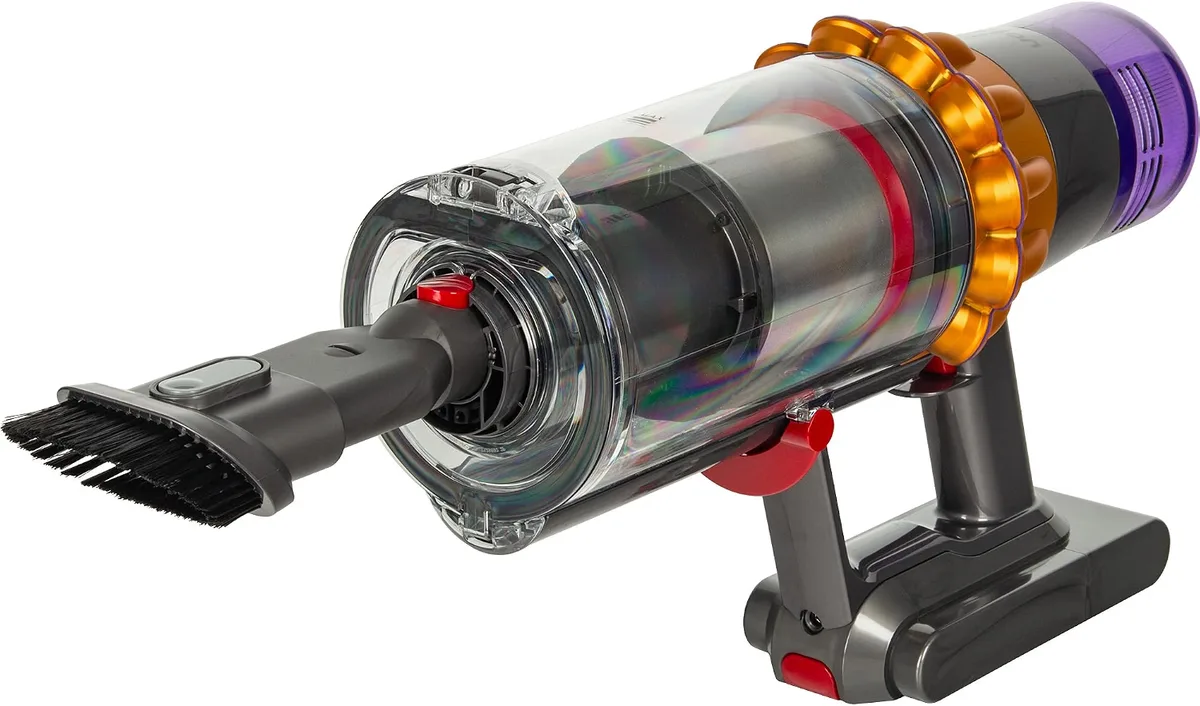
These tools clip straight onto the main body, in handheld mode. It is the most practical format for furniture: light, easy to handle, no wand.
Filtration and allergies
If someone in the household is allergic to animals, filtration becomes a priority. A poorly filtered vacuum releases back into the air some of the allergens it has just picked up, which can make symptoms worse during and after cleaning.
Look for filtration claimed for the whole machine, not just the filter. The difference lies in leaks: if air bypasses the filter through poorly sealed joints, even the best membrane is useless. For the V15 Detect, Dyson claims filtration of 99.99% of particles down to 0.3 microns, tested to the EN 60312-1 standard.
A few precautions complement filtration:
- empty the bin outdoors or straight into a sealed bag;
- air the room after cleaning;
- wash the filter as the manual says, and let it dry completely;
- for significant allergies, ask your doctor or an allergist for advice on keeping your home clean.
The bin and emptying
With a pet, the bin fills quickly. A large bin saves you stopping halfway through: the V15 Detect offers 0.76 L, one of the largest on a stick vacuum. Even so, with a dog that sheds a lot, expect to empty it at least once per session, sometimes twice.
The emptying mechanism matters as much as capacity. Hair tends to cling to the cyclones and the sides. A system that pushes the debris down as the bin opens, as on Dyson stick vacuums, means you never have to put your fingers in. Always empty over a deep bin, holding the dust bin inside the bag.
Runtime with a pet
A pet makes cleaning take longer. You need to go back over the places where it lies, vacuum the sofa and the pet bed, and empty the bin more often. Our calculator adds about 20% to cleaning time when you say you have a pet. The motorised head, essential for hair in rugs, also uses more power.
In practice, if your home is close to the limit of your stick’s runtime without a pet, it will go over with one. Two solutions: vacuum in two sessions, for example living areas one day and bedrooms the next, or get a second battery. Our article battery and runtime helps you take stock.
Which vacuum for your home?
Answer a few questions: we suggest the most suitable type of machine and estimate your cleaning time, compared with the runtime Dyson claims for the V15.
A laser to see fine dust, a sensor that counts particles, a head that untangles hair and up to 60 minutes in Eco mode: enough to replace your cylinder vacuum.
- Laser
- Up to 60 min
- 0.76 L bin
The room-by-room method
On hard floors
- Move the soft roller slowly, without lifting the machine, so you do not scatter the hair.
- Follow the skirting boards and furniture legs, where hair gathers into dust bunnies.
- In a dimly lit room, the V15’s laser helps you spot light-coloured hair.
On rugs and carpets
- Use the motorised head in Auto mode.
- Go over it in one direction, then the other: hair embedded in the fibres comes free more easily against the pile.
- On the spots where your pet lies, use Boost for a few seconds.
On the sofa and the bed
- Switch to handheld mode with the mini motorised tool or the spiral tool.
- Work cushion by cushion, brushing in the direction of the fibres.
- Use the crevice tool between cushions and along seams.
In the car
- Take out the floor mats and shake them.
- Vacuum the seats with the mini motorised tool, in handheld mode.
- Finish with the crevice tool between the seats and in the runners.
Our guide vacuuming carpets, wood floors and tiles details the techniques for each floor.
During moulting
In spring and autumn, many dogs and cats lose their undercoat in large quantities. Cleaning can then become a daily task. A few habits make it easier:
- Brush your pet regularly, preferably outside: every hair removed by the brush does not end up on the floor.
- Vacuum more often but faster: a quick daily pass in Eco or Auto mode is better than one long weekly session on embedded hair.
- Protect the sofa with a washable throw, easier to shake out and wash.
- Empty the bin and check the filter more often.
Maintenance when you have a pet
Pet hair puts more strain on the machine. Slightly more frequent maintenance keeps suction strong and prevents bad smells:
- Empty the bin after every session, without waiting for the max line: hair caught in the cyclones reduces airflow.
- Check the head every week, and remove threads and hair stuck at the ends of the brush bar.
- Wash the filter as often as the manual recommends, or a little more often during moulting.
- Clean the bin from time to time with a damp cloth, and let it dry before refitting.
- Never vacuum mess or damp litter: it clogs the machine and creates lasting odours.
The details are in our guide filter and brush bar maintenance.
Mistakes to avoid
- Using a head without an anti-tangle system on a rug full of long hair: the brush bar jams within minutes.
- Waiting for the weekend: hair left for several days works its way into the fibres and spreads throughout the home.
- Staying in Boost to go faster: the battery runs out before the end, with no real gain on hard floors.
- Forgetting under the furniture: hair forms dust bunnies there that drift out at the slightest draught.
- Vacuuming litter: the grains damage the filter and mess creates stubborn odours.
- Neglecting the pet bed: it is the main reservoir of hair and allergens in the home. Vacuum it every session and wash its cover regularly.
- Emptying the bin indoors when someone is allergic: do it outside or into a sealed bag.
With these habits, cleaning stays quick even with a pet that sheds a lot. For the right technique on each floor, see our guide vacuuming carpets, wood floors and tiles.
Organising your home
A few simple arrangements limit how far hair spreads and make vacuuming easier:
- A doormat to catch soil and sand from paws after walks.
- A washable throw on the favourite spot on the sofa, which you shake outside and put in the machine.
- A pet bed with a removable cover, easier to clean than a sewn-in cushion.
- Raised furniture, which the head passes under easily: hair does not pile up out of reach.
- Off-limits areas, such as bedrooms, to keep hair in rooms that are easy to vacuum.
These measures do not replace the vacuum, but they reduce cleaning time and how often you need to empty the bin.
Think about textiles too: machine-washable cushions, throws and sofa covers are far easier to clean than fixed fabrics. A lint roller or a rubber-bristle brush, passed quickly over clothes and delicate fabrics, complements the vacuum where it is not suitable. And regular brushing of your pet, suited to its coat, remains the most effective habit of all: every hair caught in the brush is one less hair to vacuum up throughout the home.
The Dyson V15 Detect and pets
The V15 Detect Absolute brings together the features that matter to households with pets: a tangle-free motorised head, a soft laser roller that reveals fine hair on hard floors, a dedicated tool for long hair and fur on recent versions, filtration claimed for the whole machine and one of the largest bins in its category. Pet hair is also one of the points buyers appreciate most in their reviews, according to our summary of reviews.
Its limitations are those of any stick vacuum: a bin that fills quickly with a pet that sheds a lot, a runtime that drops with the motorised head, and a weight of about 3 kg in handheld mode on the sofa. Our full review covers these points in detail.
Frequently asked questions
Which type of head for dog hair?
A tangle-free motorised head for rugs, a soft roller for hard floors and a mini motorised tool for fabrics.
Is a stick vacuum enough with a large dog?
Yes for most homes, if it is powerful and supplied with the right heads. During moulting, plan more frequent passes.
How do I stop hair wrapping round the brush bar?
Choose a tangle-free head and check it every week. Remove the battery before taking the brush bar out.
Does a vacuum reduce pet allergies?
Good filtration limits how many allergens are stirred back into the air. It does not replace a doctor’s advice if you have a significant allergy.
How often should I vacuum with a cat?
Two to three times a week normally, more often during moulting, depending on how much hair there is.
Does the laser help you see pet hair?
Yes, on hard floors: the low-angle light reveals fine, light-coloured hair that goes unnoticed on a pale wood floor, especially in a dimly lit room.
How often should I empty the bin with a dog?
At least once per session, sometimes twice during moulting. Do not wait for the max line: a bin full of hair restricts suction.
How do I remove hair embedded in a rug?
With the motorised head in Auto mode, moving slowly in one direction and then the other, plus a few seconds of Boost on the most affected areas.
Is a robot vacuum useful with a pet?
Yes, as a complement: a daily pass on clear floors removes much of the hair before it spreads. The stick remains essential for the sofa, the stairs and rugs.
Do I need a special filter for pet allergies?
Choose a machine with filtration claimed for the whole machine and keep the filter clean. No vacuum removes allergens completely, so combine it with airing and regular washing of textiles.
Cleaning you can finally see.
Laser · piezo sensor · up to 60 min in Eco · 0.76 L bin · 2-year guarantee. The price changes often on Amazon: check it, along with the seller, the exact version and the tools included, before you order.
Check the price on AmazonAffiliate link · new tab